2007 - number 8
By Roni Amelan (UNESCO) - Publication Date: 24-09-2007
Over the coming two years, UNESCO is committed to continue working for freedom of expression and press freedom and to promoting the use of the information and communication technologies to foster inclusive knowledge societies that empower individuals and communities.
"Contributing to the construction of inclusive knowledge societies through information and communication," is how UNESCO's Assistant Director-General for Communication and Information (ADG/CI), Abdul Waheed Khan encapsulates the objectives of his sector for the coming biennium.
This echoes objectives established by World Summit on the Information Society (WSIS), which UNESCO helped organize in Geneva in 2003 and in Tunis in 2005. UNESCO remains active in the WSIS process, destined to build people-centered information societies that are mindful of the Universal Declaration of Human Rights, and, of the basic human right of freedom of expression.
That strategy focuses on fostering free, independent and pluralistic communication and universal access to information. This is essential for the strengthening of participatory democracy and for the struggle against poverty, as communication and information play a central role in development. However, in many parts of the world, the media need to be reinforced so as to contribute to the international development drive, says Mr Khan.
Media development has long been at the centre of CI's work, notably through programmes such as the International Programme for the Development of Communication (IPDC) which, over the last 27 years, has raised some US$ 93 million for over 1,100 projects in 139 developing countries and countries in transition. IPDC is the only forum in the United Nations to discuss and promote free and independent media in developing countries and countries in transition.
The CI sector is also committed to continue serving as a watchdog for freedom of expression around the world, an area in which UNESCO plays a leading role, reminding Member States of their obligation to respect this fundamental human right enshrined in the Universal Declaration on Human Rights and recognized by the WSIS.
Creating resources
"Creating the resources in Member States for them to develop free and independent media is our bread and butter," says Mr Khan, recalling that universal access to knowledge depends on adequate communication and information infrastructures.
"At stake is the empowerment of individuals and communities", says Mr Khan, who recalls that the link between empowerment and knowledge is becoming ever stronger. It is therefore not surprising that another major objective for CI, is to support UNESCO in working towards fulfilling the ambitious goals of the Education For All (EFA) drive adopted by the international community in Dakar in 2000. EFA concerns overall improvements in the provision of quality basic education and life skills to all and achieving gender parity in education by 2015.
The multiplier effect
Mr Khan explains that the information and communication technologies (ICTs) can have a "multiplier effect," contributing to the education of learners and the training of teachers. "Likewise, CI works to ensure that the multiplier effect of ICTs benefits UNESCO's promotion of cultural diversity and dissemination of scientific knowledge." Thus, argues Mr Khan, CI is the leader when it comes to cooperation between UNESCO's sectors.
In addition, the ADG recalls that ICTs not only help generate and disseminate knowledge but are also important for the preservation of knowledge. Programmes such as Memory of the World serve to preserve and disseminate the heritage of documentary material and archives. Thus, through ICTs, UNESCO's Communication and Information sector has become involved in the preservation of knowledge, including indigenous knowledge, and in cultural heritage.
The new technologies have operated a deep change in the flow of information and its sharing. Mr Khan strongly believes that UNESCO must play its role in bridging the knowledge gap to ensure that this multidirectional flow of information and knowledge does not pass by those who are less privileged. With programmes such as the Community Multimedia Centres, and a wide range of partners including some of the world's leading private sector companies and NGOs, as well as networks such as the new Power of Peace Network, Mr Khan is convinced that UNESCO can contribute to world peace and development.
* Portal of the Communication and Information Sector
UNESCO
* UNESCO and WSIS – Towards Knowledge Societies
* Memory of the world
The UNESCO Courier, no.5, 2007
* Media under attack
The UNESCO Courier, no.4, 2007
* Media matters
The UNESCO Courier, no.1, 2007
Author(s): By Roni Amelan (UNESCO) - Publication Date: 24-09-2007
© UNESCO 1995-2007 - ID: 39551
Saturday, October 13, 2007


Thursday, September 20, 2007
ZAMBIA SHOULD RATIFY FRAMEWORK CONVENTION ON TOBACCO CONTROL

By Matongo Maumbi,
Tobacco kills almost five million people each year. If current trends continue, it is projected to kill 10 million people a year by 2020, with 70% of those deaths occurring in developing countries. Tobacco also takes an enormous toll in health care costs, lost productivity, and of course the intangible costs of the pain and suffering inflicted upon smokers, passive smokers and their families.
In May 2003, the member countries of the World Health Organization adopted a historic tobacco control treaty, the Framework Convention on Tobacco Control (FCTC), which has the potential to reduce this terrible toll.
The FCTC seeks to reduce on tobacco consumption and a number of other countries have ratified the convention while ZAMBIA HAS NOT. Why hasn't the Zambian Government RATIFIED the FCTC? Is it because they are reducing tax on it in a bid to gain the much needed income? Is this the best that the government can do when there are so much adverse effects of the drug?
The FCTC is encouraging governments to increase tax on tobacco and related substances so as to discourage would-be smokers and those that are already in the habit. Is it the nation's well-being or the nation's wealth that counts here? Certainly the nation has to have a healthy citizenry so that they become much more productive.
The objective of the FCTC is "to protect present and future generations from the devastating health, social, environmental and economic consequences of tobacco consumption and exposure to tobacco smoke." The Preamble of the FCTC recognises the need for countries to give priority to their right to protect public health, the unique nature of tobacco products and the harm that companies that produce them cause.
Tobacco tax increases are encouraged in the FCTC, but the Zambian Government is doing the direct opposite. The treaty states that "each Party should take account of its national health objectives concerning tobacco control" in its tobacco tax and price policies. The treaty recognizes that raising prices through tax increases and other means "is an effective and important means of reducing tobacco consumption by various segments of the population, in particular young persons."
A comprehensive ban on advertising is required: The FCTC requires all Parties to undertake a comprehensive ban on tobacco advertising, promotion and sponsorship within five years of ratifying the treaty. The ban must include cross-border advertising originating within a Party's territory. The definitions of advertising, promotion and sponsorship are broad and include indirect as well as direct forms. Countries with constitutional constraints are required to restrict advertising, promotion and sponsorship, including cross-border advertising, in a manner consistent with their constitutional principles. The Parties also agree to consider a protocol to elaborate on the cross-border provisions, for example the technical and legal aspects of preventing or blocking advertising on the internet and satellite television.
Nonsmokers must be protected in workplaces, public transport and indoor public places. The treaty recognizes that exposure to tobacco smoke has been scientifically proven to cause death, disease and disability. It requires all Parties to implement effective measures to protect nonsmokers from tobacco smoke in public places, including workplaces, public transport and indoor public places -- evidence indicates that only a total smoking ban is effective in protecting non-smokers.
Large health warning labels are required. Parties to the treaty agree that health warning labels ideally should cover 50% or more of the principle display areas of each packet, which for a standard cigarette package means both the front and back. Health warning labels must include rotating messages in the principle languages of the Party. Deceptive labels must be prohibited. Countries agree to prohibit misleading or deceptive terms on tobacco product packages within three years of becoming a Party. Research has proved that cigarettes that are labeled "light", "low tar", and "mild" (among other terms) are as dangerous as those denoted as regular and thus these terms mislead and deceive consumers about the risks involved in the use of these products. Although the treaty does not specify the terms that Parties should ban, the scientific evidence would certainly support banning the use of terms such as "light", "mild", "low tar", etc.
The Framework Convention on Tobacco Control (FCTC) is the first treaty initiated by the World Health Assembly, the governing body of the World Health Organization (WHO). Negotiations began in October 1999 and concluded on March 1st 2003. The FCTC was adopted at the World Health Assembly on May 23, 2003 and is now open for signature and ratification.
Mother Zambia, you are very welcome to ratify the treaty and help save thousands of lives in our beautiful country. Let us join hands to fight the use of tobacco, it's worthwhile call.
We can indeed be happy to have smoke free restaurants, bars and many other public places........
(with excerpts from Framework Convention Alliance and Tobacco Information & Prevention Source – TIPS)
Sunday, September 02, 2007
How can African Journalists benefit from Web2.0 revolution?
African Journalists need to embrace the new revolution of Web 2.0 tools if they are to catch up in this globalised World. Below find an interview on Web 2.0 with Matongo Maumbi a journalist from Zambia whose blog matongo.blogspot.com
Maumbi recently attended an online training focusing on Web2.0 tools organized by PenPlusBytes, the International Institute for Information and Communication Technologies (ICTs) Journalism. In 2006, PenPlusBytes launched an online course on ICT Journalism in Africa and it attracted about forty three participants from nine countries spread across Africa, Europe and Asia. You were one of these fortunate students.
Why did you want to engage in such a course? What were your needs?
Matongo: I engaged in the course because I have an interest in exploiting ICTs at personal level and also professionally. I have been working as a broadcast journalist since 2001 and I was lucky to have been exposed to the computer and internet right from the early days of my career. My ICT knowledge is driven by personal interest and enthusiasm. I needed some professional guidance on using ICTs in my career as well as how I would fully utilize them. I needed to know the pros and cons of using ICTs . The limits, the potential benefits the fun of using the internet and how to explore it better.
What did you learn? What did you prefer (e.g.,. learning about new tools, engaging with other journalists, sharing your ideas and knowledge with others, working together on a common article, networking and interacting…)?
Matongo: I learnt quite a number of things. I initially only took blogging as an adventure. Writing whatever came to my mind without any real set objective or target. I guess this was because I did it just out of interest and curiosity. I learnt how to conduct better online research for background information. How to source documents, how to set good parameters for searching. My knowledge on Web 2.0 was improved. Blogging is a good place to express oneself freely without the censorship of your editor or superiors on your work.
How does, what your learnt, influence your current journalism practice? How did it modify your way of working? How did it nurture your work (if so)? How do you apply what you learnt?
Matongo: I preferred learning new tools and also interacting with other journalists from across the continent and globe. As curiosity satisfaction was among my needs, I was really looking forward to learning new tools on ICTs. My mind was more set on learning new tools from what I already taught myself. I guess from the many things I learnt, I now spend less time on the internet. I spend less time because I know better how to conduct my online research with in the shortest possible time but with maximum information. As I am now working better with internet, it has encouraged me to continue getting a local touch to what I read on the internet. During the course I found my self working on fewer but better researched programmes that are of great relevance to our catchments community.
You created your own blog. How do you use this blog? What is the main purpose (PR, information sharing, interacting….?). Did you reach your goal? What are the strength and the weakness of such an exercise?
Matongo: Initially had a website aimed at doing radical campaigns online on things that affect Zambia. Time and resources could not allow me to continue and my site died out. Then I though of creating blog with a similar aim. I basically transferred what my site to the blog. I use the blog to make and achieve my thoughts online. As my blog is more of expressing my self, I have not yet set a good objective. In a small way I have reached my goal of transferring my thoughts online. The greatest strength is that you are your own editor and can write anything you fell is morally right at your own pace and space. You get unlimited freedom besides that fact that you have sensitive stories. Weakness comes in as most of the time I only write about my thoughts without backup professional thoughts. This creates a sense of non credibility from readers. Updates are seldom coming on the blog as I use company equipment and internet to do the updates.
What are the main challenges for African journalists to use Web2.0 tools? Do you think that most journalists have already a "mindset" for Web2 tools? What would the African Media community gain by using Web2.0?
Matongo: The main challenges of African journalists using web 2.0 tools is that we do not have our own working space. We have to rely on computers and internet from our offices. How on earth could one fully use web 2.0 tools when one does not have their own resources? The mindset for most journalists is there but a mindset with out resources is meaningless. Internet connection and access is very expensive for most journalists and even when it is affordable it is very slow. There is plenty to gain such as information sharing, unlimited power to express oneself (group) without the trouble of going through the censoring editors and managers.
Do you think that web2.0 applications - if well used by African journalists - can make the Internet more "relevant"? How so?
Matongo: I think Web 2.0 tools if properly used can make it more relevant. There is a lot of information that African Journalists have but because they have to go through editors, such info is suppressed. Mostly it is as a result of editors, managers not appreciating the role of ICTS tools.
Have you advertised your blog. If yes to whom and how?
Matongo: I think my blog is an isolated one. I have not advertised it. The only people that know about are my friends. I never thought of advertising it mainly because I think I do not update it regularly.
Are you making money from your blog?
Matongo: I am not in any way making money from my blog . I still do not fully know how I can tap into that potential. I do not really see how I can make money. I guess this is something I have to learn next. I know I have what it takes; I just do not have the right guidance.
Have you taught other about blogging?
Matongo: I have not taught any of my close friends' blogging and taking full advantage of the internet besides e-mail messaging. Training for African Journalists in necessary on new web tools because these are new things which are not taught in Journalism. It is also important to note that a blog helps to store content online for African Journalists which has been for a long time been stored in paper form. The content put on a blog is shared and people learn from that kind of content.
Maumbi recently attended an online training focusing on Web2.0 tools organized by PenPlusBytes, the International Institute for Information and Communication Technologies (ICTs) Journalism. In 2006, PenPlusBytes launched an online course on ICT Journalism in Africa and it attracted about forty three participants from nine countries spread across Africa, Europe and Asia. You were one of these fortunate students.
Why did you want to engage in such a course? What were your needs?
Matongo: I engaged in the course because I have an interest in exploiting ICTs at personal level and also professionally. I have been working as a broadcast journalist since 2001 and I was lucky to have been exposed to the computer and internet right from the early days of my career. My ICT knowledge is driven by personal interest and enthusiasm. I needed some professional guidance on using ICTs in my career as well as how I would fully utilize them. I needed to know the pros and cons of using ICTs . The limits, the potential benefits the fun of using the internet and how to explore it better.
What did you learn? What did you prefer (e.g.,. learning about new tools, engaging with other journalists, sharing your ideas and knowledge with others, working together on a common article, networking and interacting…)?
Matongo: I learnt quite a number of things. I initially only took blogging as an adventure. Writing whatever came to my mind without any real set objective or target. I guess this was because I did it just out of interest and curiosity. I learnt how to conduct better online research for background information. How to source documents, how to set good parameters for searching. My knowledge on Web 2.0 was improved. Blogging is a good place to express oneself freely without the censorship of your editor or superiors on your work.
How does, what your learnt, influence your current journalism practice? How did it modify your way of working? How did it nurture your work (if so)? How do you apply what you learnt?
Matongo: I preferred learning new tools and also interacting with other journalists from across the continent and globe. As curiosity satisfaction was among my needs, I was really looking forward to learning new tools on ICTs. My mind was more set on learning new tools from what I already taught myself. I guess from the many things I learnt, I now spend less time on the internet. I spend less time because I know better how to conduct my online research with in the shortest possible time but with maximum information. As I am now working better with internet, it has encouraged me to continue getting a local touch to what I read on the internet. During the course I found my self working on fewer but better researched programmes that are of great relevance to our catchments community.
You created your own blog. How do you use this blog? What is the main purpose (PR, information sharing, interacting….?). Did you reach your goal? What are the strength and the weakness of such an exercise?
Matongo: Initially had a website aimed at doing radical campaigns online on things that affect Zambia. Time and resources could not allow me to continue and my site died out. Then I though of creating blog with a similar aim. I basically transferred what my site to the blog. I use the blog to make and achieve my thoughts online. As my blog is more of expressing my self, I have not yet set a good objective. In a small way I have reached my goal of transferring my thoughts online. The greatest strength is that you are your own editor and can write anything you fell is morally right at your own pace and space. You get unlimited freedom besides that fact that you have sensitive stories. Weakness comes in as most of the time I only write about my thoughts without backup professional thoughts. This creates a sense of non credibility from readers. Updates are seldom coming on the blog as I use company equipment and internet to do the updates.
What are the main challenges for African journalists to use Web2.0 tools? Do you think that most journalists have already a "mindset" for Web2 tools? What would the African Media community gain by using Web2.0?
Matongo: The main challenges of African journalists using web 2.0 tools is that we do not have our own working space. We have to rely on computers and internet from our offices. How on earth could one fully use web 2.0 tools when one does not have their own resources? The mindset for most journalists is there but a mindset with out resources is meaningless. Internet connection and access is very expensive for most journalists and even when it is affordable it is very slow. There is plenty to gain such as information sharing, unlimited power to express oneself (group) without the trouble of going through the censoring editors and managers.
Do you think that web2.0 applications - if well used by African journalists - can make the Internet more "relevant"? How so?
Matongo: I think Web 2.0 tools if properly used can make it more relevant. There is a lot of information that African Journalists have but because they have to go through editors, such info is suppressed. Mostly it is as a result of editors, managers not appreciating the role of ICTS tools.
Have you advertised your blog. If yes to whom and how?
Matongo: I think my blog is an isolated one. I have not advertised it. The only people that know about are my friends. I never thought of advertising it mainly because I think I do not update it regularly.
Are you making money from your blog?
Matongo: I am not in any way making money from my blog . I still do not fully know how I can tap into that potential. I do not really see how I can make money. I guess this is something I have to learn next. I know I have what it takes; I just do not have the right guidance.
Have you taught other about blogging?
Matongo: I have not taught any of my close friends' blogging and taking full advantage of the internet besides e-mail messaging. Training for African Journalists in necessary on new web tools because these are new things which are not taught in Journalism. It is also important to note that a blog helps to store content online for African Journalists which has been for a long time been stored in paper form. The content put on a blog is shared and people learn from that kind of content.
Tuesday, April 17, 2007
School Certificate - Zambia's Dream MDGs
Education is one of the fundamental human rights and it is also contained in the Millennium Development Goals (MDG) targets for 2015. We have already marked the half way point for these goals to be achieved.
This is a good idea. Children can now have a basic education. With basic education, children should as well be equipped with the learning environment they would encounter when they qualify to Grade 10. At the moment there is hardly any basic school with lab facilities to foster for some practical works. more can be said on this, you may add your own thoughts.
The basic schools have now out numbered the high schools. So, where do those children that qualify to go to Grade 10 go to when the high school are already filled? They have nowhere to go to besides going back home and trying to help with different chores at home or worse still, start with the vices we teach them against. Again, you may add more of your thoughts.
Zambia needs a much dedicated effort in achieving education for all. it is achievable. Achieving the MDGs does not mean we have to achieve the basics of it, we need quality achievement. These are development goals. We cannot develop with very poor results from our children and children's children.
And it seems the Zambian Government is too excited to achieve this goal at all costs. Is it achievale?
This is achievable, and we shall achieve it. The question is: What quality of Education shall we achieve by the year 2015? The Government of Zambia has made a lot of strides in making sure that the citizenry is educated. Primary schools (up to grade 7) have (almost) been fade out. The primary schools are now basic schools (grades 1 to 9), and high schools (grades 10 to 12) have been introduced.
This is achievable, and we shall achieve it. The question is: What quality of Education shall we achieve by the year 2015? The Government of Zambia has made a lot of strides in making sure that the citizenry is educated. Primary schools (up to grade 7) have (almost) been fade out. The primary schools are now basic schools (grades 1 to 9), and high schools (grades 10 to 12) have been introduced.
This is a good idea. Children can now have a basic education. With basic education, children should as well be equipped with the learning environment they would encounter when they qualify to Grade 10. At the moment there is hardly any basic school with lab facilities to foster for some practical works. more can be said on this, you may add your own thoughts.
The basic schools have now out numbered the high schools. So, where do those children that qualify to go to Grade 10 go to when the high school are already filled? They have nowhere to go to besides going back home and trying to help with different chores at home or worse still, start with the vices we teach them against. Again, you may add more of your thoughts.
It is as though government heard my concern, but just decided to make it worse.
You now just have to have a basic grade 9 certificate to proceed to grade 10. How on earth can you have all those children in schools which are non-existent? I was shocked when I heard the pronouncement from the minister of education.
I eagerly awaiting government's pronouncement that they were going to upgrade the infrastucture of a number of basic schools in the country. increase the number of classes in the high schools so that the many children that come from the basic schools can be accommodated. The situation now is having over 70 children in one class. Yes, and I mean 7 x 10 = 70.
The majority of the teachers in these basic schools are trained to teach up to grade 7. Now they have to be tasked to teach grades 8 and 9 - without training!! The infrastructure is not enough to handle the many children and teachers. There is under staffing, and many teachers have to do double classes. this is not just a double class. It's a class where you would have grade 3 and 4 pupils learning in the same class. What logic there is in this I still do not understand.
The children have been learning for free up to Grade 9. And they were happy the government was helping them. They would qualify to go senior secondary, and now be faced with the headache of searching for at least half a million kwacha to get to school. Free education should be free education at all levels otherwise we are moving more steps backwards than we are forwarding.
Government should not just upgrade the grades in schools, they should upgrade all the staff, infrastructure and finances for education to be for all at all times.
The majority of the teachers in these basic schools are trained to teach up to grade 7. Now they have to be tasked to teach grades 8 and 9 - without training!! The infrastructure is not enough to handle the many children and teachers. There is under staffing, and many teachers have to do double classes. this is not just a double class. It's a class where you would have grade 3 and 4 pupils learning in the same class. What logic there is in this I still do not understand.
The children have been learning for free up to Grade 9. And they were happy the government was helping them. They would qualify to go senior secondary, and now be faced with the headache of searching for at least half a million kwacha to get to school. Free education should be free education at all levels otherwise we are moving more steps backwards than we are forwarding.
Government should not just upgrade the grades in schools, they should upgrade all the staff, infrastructure and finances for education to be for all at all times.
I would love to know if the minister has children that fall in that category. may be they are performing very poorly and he would like them qualify with the minimum results.
Imagine a certificate holder writing the G12 final exams. he will do the same hoping to go to college with a basic certificate of education. Soon we shall have colleges, and the universities taking up all those that have proof of completing G12.
Zambia needs a much dedicated effort in achieving education for all. it is achievable. Achieving the MDGs does not mean we have to achieve the basics of it, we need quality achievement. These are development goals. We cannot develop with very poor results from our children and children's children.
Not all shall be chosen, a few shall be selected and we have to improve on that quality so that their output shall be qualitable as well.
We are losing our high education standards, especially in government funded schools. The private or church owned schools are forever going to be succeeding as they do not compromise quality at the expense of EFA.
We need high quality Education For All.
Tuesday, January 30, 2007

Thursday, January 25, 2007

Sunday, December 10, 2006
Journey To Solwezi
This entry is about: Zambia
In June 2006, I went to Solwezi on a mission to see the business opportunities there. I was actually doing a favour to my friend.
All was well for the journey. Got permission to be away from work for three days. I left work in good time so that I manage to get to Lusaka before dusk. I asked my friend to get me a ticket to Solwezi in advance.
Well, as you might know chikuni is in a rural area, transport to the nearest town is hard to come by, especially when you are in a hurry. I was at the taxi station for almost three hours. Luckily there was a friend with me and finally we decided to walk the Great North Road in Chisekesi. This is an 11km walk. Within no time we were in Chisekesi. I got to know more about my friend's background and the struggles he has been through. He had a tough time as a refugee from Angola.
I was in Monze after 6pm. Got on a bus to Lusaka, or at least we were heading there. Unfortunately, as Zambia is crippled with fuel shortages more often, our bus was hoping to refuel in Mazabuka. Oh no, there was no fuel in Mazabuka. This meant that we could not proceed to Lusaka as it would be too risky to drive and then come to a complete stop somewhere in the bushes. We could not risk being attacked by chancers who want traffic accidents so that they get what they want.
My bus from Lusaka to Solwezi was scheduled for 5am, and it was now almost midnight and still in Mazabuka. I was the only one that was beating the deadline. The others in the bus didn't mind spending the night in the bus. I just couldn't get any sleep. I had to get to Lusaka, but how? I was just praying and hoping for an early bus from Livingstone. Around 5:07am, I managed to jump on another bus to Lusaka. As if the driver knew that I had a bus to catch, he drove fast - I didn't mind the speed. Luck was on my side when I reached Lusaka and found that the bus we were supposed to use for Solwezi had a problem and as such were getting another bus. The faulty bus was working at my advantage as it delayed departure giving me time to get to Lusaka. I was in time to get on the bus and to be moved to another better bus.
Eight hours later I was in Solwezi, very fatigued. My friend was waiting for me at the Solwezi Bus Station and WOW, everyone was busy making money. Just imagine a store in a car! Just opening up the doors and putting the commodities on sale on the seats. People are serious with business in Solwezi and the town is surely growing.
There seems to be no much orderliness and the local authority needs to bring sanity to the little town. Business is conducted and anywhere and everywhere.
My trip back was very fine and I enjoyed Solwezi. Hope to go back there soon, when I have enough time.
This entry is about: Zambia
In June 2006, I went to Solwezi on a mission to see the business opportunities there. I was actually doing a favour to my friend.
All was well for the journey. Got permission to be away from work for three days. I left work in good time so that I manage to get to Lusaka before dusk. I asked my friend to get me a ticket to Solwezi in advance.
Well, as you might know chikuni is in a rural area, transport to the nearest town is hard to come by, especially when you are in a hurry. I was at the taxi station for almost three hours. Luckily there was a friend with me and finally we decided to walk the Great North Road in Chisekesi. This is an 11km walk. Within no time we were in Chisekesi. I got to know more about my friend's background and the struggles he has been through. He had a tough time as a refugee from Angola.
I was in Monze after 6pm. Got on a bus to Lusaka, or at least we were heading there. Unfortunately, as Zambia is crippled with fuel shortages more often, our bus was hoping to refuel in Mazabuka. Oh no, there was no fuel in Mazabuka. This meant that we could not proceed to Lusaka as it would be too risky to drive and then come to a complete stop somewhere in the bushes. We could not risk being attacked by chancers who want traffic accidents so that they get what they want.
My bus from Lusaka to Solwezi was scheduled for 5am, and it was now almost midnight and still in Mazabuka. I was the only one that was beating the deadline. The others in the bus didn't mind spending the night in the bus. I just couldn't get any sleep. I had to get to Lusaka, but how? I was just praying and hoping for an early bus from Livingstone. Around 5:07am, I managed to jump on another bus to Lusaka. As if the driver knew that I had a bus to catch, he drove fast - I didn't mind the speed. Luck was on my side when I reached Lusaka and found that the bus we were supposed to use for Solwezi had a problem and as such were getting another bus. The faulty bus was working at my advantage as it delayed departure giving me time to get to Lusaka. I was in time to get on the bus and to be moved to another better bus.
Eight hours later I was in Solwezi, very fatigued. My friend was waiting for me at the Solwezi Bus Station and WOW, everyone was busy making money. Just imagine a store in a car! Just opening up the doors and putting the commodities on sale on the seats. People are serious with business in Solwezi and the town is surely growing.
There seems to be no much orderliness and the local authority needs to bring sanity to the little town. Business is conducted and anywhere and everywhere.
My trip back was very fine and I enjoyed Solwezi. Hope to go back there soon, when I have enough time.
BAN SMOKING or RECLASSIFY IT AS AN ILLEGAL DRUG

By Hope Chitambo
Smoking is a health hazard for smokers, non-smokers, children and unborn babies and should be banned or reclassified as an illegal drug. Surprisingly, smokers claim that it helps them to release stress and relax, despite knowing that they would be in worse stressed illnesses caused by tobacco. The solution would be to declare tobacco as illegal, starting from the grower.
Tobacco smoking is the major cause of respiratory diseases such as lung cancer, bronchitis as well as heart disease which are all expensive to treat. The amounts of money spent on the treatment of these diseases exceed by far, the amounts that government receives from taxing tobacco. Non-smoking tax payers, have been subjected to an unfair situation were they are forced to pay for the health of smokers.
The nicotine contained in cigarettes is a dangerous substance that is also used in liquid form as an insecticide. Furthermore, non-smokers have fallen victims of cancer, bronchitis and other smoke related diseases, as a result of passive smoking. It is difficult for anyone to avoid inhaling second hand smoke as it always finds its way in different directions. This is the case even in places where smoking areas are separated from non-smoking ones. The fact is, smoke passes through air and can therefore easily pass through the thinnest gap. For this reason, tobacco should be reclassified as an illegal substance because of the danger it causes to everyone.
Even though the government has taken noteworthy steps towards controlling tobacco, such as beefing up warnings on cigarette packets, banning advertising by tobacco companies and establishing network of smoking termination clinics, further actions need to be taken to create an environment where not smoking becomes a social standard.
Finally, a lot of money is being spent on treatment of tobacco related illness and as well as on campaigns to sensitise people on the dangers of tobacco. As a result of all these efforts falling on deaf ears, the innocent non-smokers who include children and unborn babies end up suffering too.
Therefore, lives of both smokers and non-smokers can only be protected if government could ban tobacco growing as is the case with marijuana, heroine and cocaine, because that is the starting point to smoking.
By Hope Chitambo
Smoking is a health hazard for smokers, non-smokers, children and unborn babies and should be banned or reclassified as an illegal drug. Surprisingly, smokers claim that it helps them to release stress and relax, despite knowing that they would be in worse stressed illnesses caused by tobacco. The solution would be to declare tobacco as illegal, starting from the grower.
Tobacco smoking is the major cause of respiratory diseases such as lung cancer, bronchitis as well as heart disease which are all expensive to treat. The amounts of money spent on the treatment of these diseases exceed by far, the amounts that government receives from taxing tobacco. Non-smoking tax payers, have been subjected to an unfair situation were they are forced to pay for the health of smokers.
The nicotine contained in cigarettes is a dangerous substance that is also used in liquid form as an insecticide. Furthermore, non-smokers have fallen victims of cancer, bronchitis and other smoke related diseases, as a result of passive smoking. It is difficult for anyone to avoid inhaling second hand smoke as it always finds its way in different directions. This is the case even in places where smoking areas are separated from non-smoking ones. The fact is, smoke passes through air and can therefore easily pass through the thinnest gap. For this reason, tobacco should be reclassified as an illegal substance because of the danger it causes to everyone.
Even though the government has taken noteworthy steps towards controlling tobacco, such as beefing up warnings on cigarette packets, banning advertising by tobacco companies and establishing network of smoking termination clinics, further actions need to be taken to create an environment where not smoking becomes a social standard.
The nicotine which is found in tobacco is as highly addictive as substances such as heroin and cocaine, which are classified as illegal. Tobacco should also fall in the category of illegal drugs because it is a danger to people's health.
Finally, a lot of money is being spent on treatment of tobacco related illness and as well as on campaigns to sensitise people on the dangers of tobacco. As a result of all these efforts falling on deaf ears, the innocent non-smokers who include children and unborn babies end up suffering too.
Therefore, lives of both smokers and non-smokers can only be protected if government could ban tobacco growing as is the case with marijuana, heroine and cocaine, because that is the starting point to smoking.
Tuesday, November 21, 2006
October, The Dark Month For Zambia
The month of October 2006 can best be described as a Black month for theatre artists in Zambia as three prominent artists Kingsley Sinkala, Sonny Ngwenya and Cosmas Gabriel Mpundu died during the month. The untimely, horrendous and brutal demise of one of Zambia’s theatrical heroes has really saddened the artistic fraternity. In Kingsley Sinkala we have lost an ambassador, a friend, a musician, an actor, producer, director and arts promoter.
Kingsley was killed by armed bandits in Johannesburg, South Africa. He was shot by four men who raided his landlord's house in Rundburg residential area on Saturday 30th September 2006. He was gunned down when he tried to rescue his landlord who had been attacked by armed bandits. The late Kingsley was 43years and is survived by a wife and five children.
Kingsley had been on the art scene for entirely all of his lifetime having taken part in the ZANTAA festivals of the 70s and 80s as a schoolboy at Ndeke Secondary School. This was the time when, together with, the late Graig Lungu, Maidstone Mulenga, Elijah Daka, Danny Chanda and scores of other upstarts founded the youthful but powerful Tithandidze Theatre Group. Kingsley excelled both as an actor and a playwright and actually conceived a good number of plays that were accredited as having been written by the late Graig Lungu. Among such plays were ‘Woman is Queen’, ‘Den of Torment’, ‘Ring of Fire’, ‘Forsaken’ and ‘Love Enchained’.
His theatrical prowess continued at Zambia National Service where he helped found KAFUNASE, the Kafue National Service Drama Group, which later became ZANASE. For some time after the Zambia National Service stint, Kingsley led what one would call a peripatetic life, living in about four towns a long the Great North road. He was in Lusaka, Kabwe, Kapiri Mposhi and Kitwe, and in all these towns, he was involved in various theatrical activities. It was the Venus Theatre Club project in Kabwe that catapulted him to greater heights when he played a leading role in ‘Kalicheli,’ a musical production penned, produced and directed by the late Kwaleyela Ikafa. In this successful and highly acclaimed production, Kingsley Sinkala played the leading role of Kalicheli.
In ‘Kalicheli', he partnered well with Belinda Dube who played the role of ‘Sheli’. The play went on to win an award at the 1982 TAZ Festival and was one of the best pieces ever to be screened on Zambia National Broadcasting Corporation Television.
Kingsley, fondly known as King, went on to push his talent to the top when he featured in a memorial play for the late Haggai Chisulo. ‘Haggai Remembered’ was a compilation of six excerpts from six plays in which Chisulo had played the leading role. The director Mumba Kapumpa wanted an energetic actor who could play Haggai’s roles in these excerpts, and Kingsley scooped the part. The role was extremely demanding because the characters varied and the play was fast paced requiring someone who would change character and costume quickly enough so that it’s continuity was not disturbed.
Kingsley stole the hearts of the audience when ‘Haggai Remembered’ premiered at Evelyn Hone College Hall. Many would recall how Kingsley changed from being an American guy in ‘I’ve Always Been A Stranger Here’, to ‘Che’ in ‘Che Guevara’, to ‘Kamunu’ in ‘Hunter of God’ and ‘Man’ in ‘Soweto Flowers Will Grow’ among the six other roles he played in that masterpiece. The beauty with Kingsley was his attitude towards criticism and eagerness to share ideas.
In 1989, Kingsley Sinkala found himself in another musical play, again by Kwaleyela Ikafa who had now moved to Kitwe from Kabwe. The play was special in that the actors lived in different parts of Zambia and only met occasionally for rehearsal. Kingsley was based in Kapiri Mposhi. The play, ‘Mawe-The Musical Riffs of Conscience’, was performed by CAST ( Creative Arts Simple Theatre ) with Kingsley taking the leading role of Kadansa.
‘Mawe’ told a story of two warring gangs in society ‘The Makululu People’ and ‘The Coach Station People’. These two groups were at each other’s necks with each blaming the other for its own social problems. Incidentally, the play saw the return of the two stars of Kalicheli as leaders of the two gangs. Sinkala (as ‘Kadansa’) led ‘The Makululu people’ whilst Belinda (as Tendai) led the ‘The Coach Station People’.
This contact with musicals brought out the musician in Kingsley Sinkala such that in 1991, he entered the ZNBC Studios and recorded an airplay single entitled ‘Uno Mwaka Tulevota’ backed by The Green Labels band. At this time, he was back with ZANASE as a full time actor taking part in a number of their ‘Play Circle’ productions that were the only local production on Zambia National Broadcasting Corporation Television.
After 1991, Kingsley Sinkala decided to export his rich artistry to the highly competitive South African scene where he still weathered the storm and represented the Zambia in that country. Apart from teaching drama and dance at high school, he wrote, produced and directed a number of successful pieces for the South African theatre.
Among the pieces that Kingsley did in South Africa, were musicals ‘One Love’ and ‘Katinanga’. He also featured in another drama entitled ‘Room 20’, a two man cast in which he played ‘Jabu’ an undercover cop investigating the activities of a drug trafficking sex-worker. Sinkala also wrote and directed the play. In Kingsley Sinkala, the nation has definitely lost a dedicated patriotic Zambian artiste who worked for the betterment of the arts.
As the country was still mourning Kingsley, the national again lost Television soap opera actor, Sonny Ngwenya, who died in Lusaka on Friday 6th October 2006. Ngwenya entered the limelight soon after the launch of the ZNBC Talent Search for Kabanana soap opera. He was picked during the talent search, and has been featuring in the Kabanana Soap, as a Drug Enforcement Officer.
Ngwenya also appeared in a ZNBC better TV advertisement where he acts as an informer for ZNBC TV licence officials.
Cosmas Gabriel Mpundu, a producer , play director, accomplished actorand playwright, died in Chingola on 19th October 2006 and was buried four days later in the same town. On 22nd October 2006, artists paid their last respects to Cosmas when his body passed through the Chingola Arts Society auditorium.
Tuesday, August 22, 2006
Mpundu Mutale: A sad end to 'Tata' Africa (obituary)
This entry is about: Zambia
By KELVIN KACHINGWE
THIS is no way to end an illustrious career.
That a receipient of the Presidents Insignia of Honour, who was so honoured for the essential role that he played during the freedom struggle, should spend his final years as a pauper is highly embarrassing.
For a man who moved the entire nation, and indeed dignitaries in particular, with his emotional performances of his all-time great, Afrika My Afrika during African Freedom Day and Indepdence Day commemorations at State House, he surely deserved a little more than he got in the evening of his life.
Mpundu Mutale, who passed on to the Other Side of Town at the age of 71 after losing his battle against Diabetes in the University Teaching Hospital, for all that he represented, does pass as a perfect example of how not a nation should treat its heroes.
So desperate was his situation that he was literally begging, much the same street kids do, for assistance. Only in his case, for resources to enable him undergo for specialist treatment in South Africa.
Mutale, who addmitted to the Intensive Care Unit at the UTH, said from his hospital bed a few months ago that he felt time was running out for him as the situation was getting worse.
"I have been calling for help for a very long time but even the little help has come very late but if resources could be made available, I wouldn't mind going to South Africa," Mutale said.
Indeed the cry for assistance started a long-time ago for Mpundu Mutale, who was a prominent feature at celebrations at State House. But so say he need resources for specialist treatment is not to tell the exact truth. Truth of the matter is that he needed more than that. Other than resources to enable him release audio and video tapes of Afrika My Afrika, he also needed money for his upkeep. His abode in Chibolya, which this writer visited in 2004 was a sorry sight. It did not look much different from a stable at a pony club. His appearance was that of a dishevelled old man in crumpled clothes, hair matted, lips cracking and a tatty shirt, an inferior defence against the cold.
While there, he narrated how he needed money to undergo treatment and just to stay alive.
"I feel my life is falling apart. Misfortunes are happening in quick succession. First it was diabetes, now i'm too broke to support myself and to have my music and film on the market," he said.
The six-foot tall Mpundu, with a greying beard, was living alone in a makeshift home just behind Lusaka's Soweto market. At one point, he was unable to walk because of diabetes which has caused his feet to swell. The toes on both feet were turning a greenish colour and amputation would have probably been an option had he managed to go to South Africa for specialist treatment.
In Chibolya, he would go for days without a meal. Most of the time, it was his neighbour, a Mrs Liness Bnda, who used to help the artiste from time-to-time.
In explaining Mr Mutale's predicament, Mrs Banda called on the government and other well-wishers to come to his aid. She said it was shameful for the man who had contributed so much to the struggle for independence both musically and physically to be in such a state.
"The man has something to teach Zambians through his music and the videos depicting the struggle for independence," she said while further explaning that at one time, the old man had collapsed in his house and was only discovered after neighbours saw his legs protruding from the door of his home.
Mr Mutale, who was born on September 30, 1935, was divorced though he had a family in Kasama which, however, was unable to support him financially. A number of his children had passed on.
In his early years, he was a UNIP activist in Kasama during the struggle for independence and was heavily involved in the civil disobedience campaign that was directed against the colonialists.
His cousin, Martin Mwamba, who was also an activist, was murdered after being brutally beaten by the Northern Rhodesia police when he refused to disclose the whereabouts of UNIP stalwarts.
It was actually that, and the other injustices that were done against the blacks by the colonialists that led him to compose songs like Afrika My Afrika and When Afrika was in the Dark.
It was because of the contribution Mr Mutale made to the country that the Times of Zambia, in a feature article headlined The sorry sight of Mpundu Mutale, dated July 17, 1994, appealed to well-wishers to come to his aid before it is too late.
Humbly enough, even his poor health, he still wanted to complete the adio and video tapes of the Afrika My Afrika.
At the height of his illness and dire financial need, he wrote a letter to the Sunday Times of Zambia in which he appealed to well-wishers, charitable organisations and individuals to enable him complete the music projects.
"The short clip of the promo film Afrika My Afrika is now ready and has been showing on ZNBC for five months now. I'm promising my fans that I would release the complete version of the film on the market as soon as I start receiving contributions for the venture.
"I would like to point out that the film has taken long to release because of unseen circumstances mostly to do with funding for the project," reads the letter dated April 25, 2004.
The audio tape and CD of Afrika My Afrika Volume I was to have 10 songs. There was also a chi-Bemba version of Afrika Mayo Afrika also with 10 tracks. The album was also to have have an instrumental version of Afrika My Afrika poems.
"I would again like to express my personal feelings about Africa by highlighting both in songs and pictures how the continent was depopulated and underdeveloped by slavery and colonialism. The history which African people cannot forget should make people learn a lot from this noble and educative historical project on their past," Mr Mutale wrote in his letter.
Unfortunately however, no tangible help came. On the contrary, his health continued to deteriorate resulting in his death at the UTH last Tuesday.
But before that, Brian Chengala Shakarongo, a former Zambia Association of Musicians (ZAM) chairman organised a concert in aid of the ailing Mutale last December.
The concert, held at UNZA, was however shunned by the artistes except for James "Chamanyazi" Ngoma and Cha (Charity Mwiinga) and the Muvi Posse crew.
But true to form, there will be sustained chorus of praise for the man, who while in life, was neglected by his own society. On a positive note though, credit should go to Mama Chibesa Kankasa for hosting the funeral of Mpundu Mutale at Kabulonga House near Friday's Corner out of solidarity despite the fact that they are not related.
Otherwise, this is a moment for the nation to reflect on how it treats its own heroes.
Ends...
By KELVIN KACHINGWE
THIS is no way to end an illustrious career.
That a receipient of the Presidents Insignia of Honour, who was so honoured for the essential role that he played during the freedom struggle, should spend his final years as a pauper is highly embarrassing.
For a man who moved the entire nation, and indeed dignitaries in particular, with his emotional performances of his all-time great, Afrika My Afrika during African Freedom Day and Indepdence Day commemorations at State House, he surely deserved a little more than he got in the evening of his life.
Mpundu Mutale, who passed on to the Other Side of Town at the age of 71 after losing his battle against Diabetes in the University Teaching Hospital, for all that he represented, does pass as a perfect example of how not a nation should treat its heroes.
So desperate was his situation that he was literally begging, much the same street kids do, for assistance. Only in his case, for resources to enable him undergo for specialist treatment in South Africa.
Mutale, who addmitted to the Intensive Care Unit at the UTH, said from his hospital bed a few months ago that he felt time was running out for him as the situation was getting worse.
"I have been calling for help for a very long time but even the little help has come very late but if resources could be made available, I wouldn't mind going to South Africa," Mutale said.
Indeed the cry for assistance started a long-time ago for Mpundu Mutale, who was a prominent feature at celebrations at State House. But so say he need resources for specialist treatment is not to tell the exact truth. Truth of the matter is that he needed more than that. Other than resources to enable him release audio and video tapes of Afrika My Afrika, he also needed money for his upkeep. His abode in Chibolya, which this writer visited in 2004 was a sorry sight. It did not look much different from a stable at a pony club. His appearance was that of a dishevelled old man in crumpled clothes, hair matted, lips cracking and a tatty shirt, an inferior defence against the cold.
While there, he narrated how he needed money to undergo treatment and just to stay alive.
"I feel my life is falling apart. Misfortunes are happening in quick succession. First it was diabetes, now i'm too broke to support myself and to have my music and film on the market," he said.
The six-foot tall Mpundu, with a greying beard, was living alone in a makeshift home just behind Lusaka's Soweto market. At one point, he was unable to walk because of diabetes which has caused his feet to swell. The toes on both feet were turning a greenish colour and amputation would have probably been an option had he managed to go to South Africa for specialist treatment.
In Chibolya, he would go for days without a meal. Most of the time, it was his neighbour, a Mrs Liness Bnda, who used to help the artiste from time-to-time.
In explaining Mr Mutale's predicament, Mrs Banda called on the government and other well-wishers to come to his aid. She said it was shameful for the man who had contributed so much to the struggle for independence both musically and physically to be in such a state.
"The man has something to teach Zambians through his music and the videos depicting the struggle for independence," she said while further explaning that at one time, the old man had collapsed in his house and was only discovered after neighbours saw his legs protruding from the door of his home.
Mr Mutale, who was born on September 30, 1935, was divorced though he had a family in Kasama which, however, was unable to support him financially. A number of his children had passed on.
In his early years, he was a UNIP activist in Kasama during the struggle for independence and was heavily involved in the civil disobedience campaign that was directed against the colonialists.
His cousin, Martin Mwamba, who was also an activist, was murdered after being brutally beaten by the Northern Rhodesia police when he refused to disclose the whereabouts of UNIP stalwarts.
It was actually that, and the other injustices that were done against the blacks by the colonialists that led him to compose songs like Afrika My Afrika and When Afrika was in the Dark.
It was because of the contribution Mr Mutale made to the country that the Times of Zambia, in a feature article headlined The sorry sight of Mpundu Mutale, dated July 17, 1994, appealed to well-wishers to come to his aid before it is too late.
Humbly enough, even his poor health, he still wanted to complete the adio and video tapes of the Afrika My Afrika.
At the height of his illness and dire financial need, he wrote a letter to the Sunday Times of Zambia in which he appealed to well-wishers, charitable organisations and individuals to enable him complete the music projects.
"The short clip of the promo film Afrika My Afrika is now ready and has been showing on ZNBC for five months now. I'm promising my fans that I would release the complete version of the film on the market as soon as I start receiving contributions for the venture.
"I would like to point out that the film has taken long to release because of unseen circumstances mostly to do with funding for the project," reads the letter dated April 25, 2004.
The audio tape and CD of Afrika My Afrika Volume I was to have 10 songs. There was also a chi-Bemba version of Afrika Mayo Afrika also with 10 tracks. The album was also to have have an instrumental version of Afrika My Afrika poems.
"I would again like to express my personal feelings about Africa by highlighting both in songs and pictures how the continent was depopulated and underdeveloped by slavery and colonialism. The history which African people cannot forget should make people learn a lot from this noble and educative historical project on their past," Mr Mutale wrote in his letter.
Unfortunately however, no tangible help came. On the contrary, his health continued to deteriorate resulting in his death at the UTH last Tuesday.
But before that, Brian Chengala Shakarongo, a former Zambia Association of Musicians (ZAM) chairman organised a concert in aid of the ailing Mutale last December.
The concert, held at UNZA, was however shunned by the artistes except for James "Chamanyazi" Ngoma and Cha (Charity Mwiinga) and the Muvi Posse crew.
But true to form, there will be sustained chorus of praise for the man, who while in life, was neglected by his own society. On a positive note though, credit should go to Mama Chibesa Kankasa for hosting the funeral of Mpundu Mutale at Kabulonga House near Friday's Corner out of solidarity despite the fact that they are not related.
Otherwise, this is a moment for the nation to reflect on how it treats its own heroes.
Ends...
Tuesday, May 30, 2006
Free Press a MUST
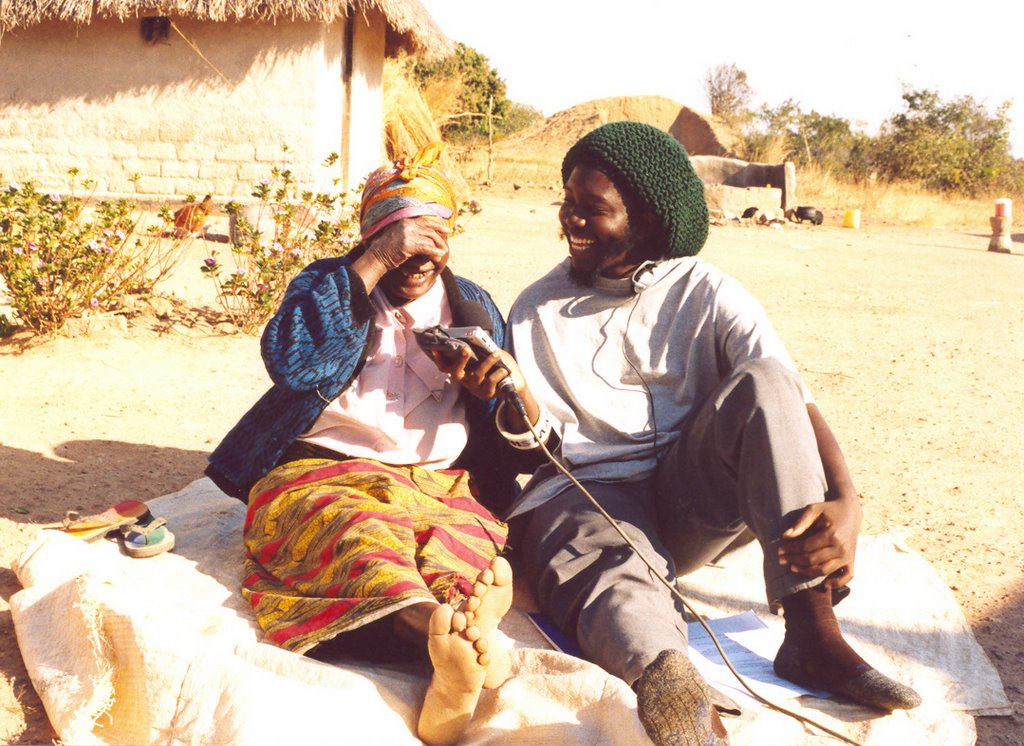
By Matongo Maumbi from Chikuni
No single government in the world can operate without the press because the press is the forth most important estate after the executive, judiciary and legislature in any democratic state. And for the press to be really appreciated as the forth estate, they must be accorded the freedom to access information.
Former US President Thomas Jefferson, wrote in 1802; “Where it is left for me to decide whether we should have a government without newspapers or newspapers without a government, I should not hesitate to prefer the latter.”
This therefore means Journalists are supposed to play a watchdog role over the government. For them to perform this role, they must have undeniable access to information. Unfortunately, Zambia like many African countries does not have a Freedom of Information Act written in the constitution.
Many countries instead have the Official Secrets Acts so vaguely written that officials can interpret them in a way to avoid scrutiny of their actions or they may wish to hide something from the public. Such acts also prevent citizens from verifying information held by powerful institutions and indeed leaders of influential positions.
There is also the Public Order Act that can be used to deny the media access to information, arrest and detain journalists or search a media institution’s premises and confiscate material. These acts are sometimes justified on grounds of state security.
While it is necessary for any government to protect national security, our government often fails to distinguish between state secrets and information that has no implication on that security.
Public interest arguments might include the need for properly informed debate, exposing wrongdoing, protecting the public from danger, accounting for public funds, demonstrating that standards are being observed, that authorities are properly discharging their responsibilities, ensuring that people are dealt with fairly and the public is not misled. (The Campaign for Freedom of Information )
If information is withheld, the authority should tell you which exemption it has relied on, why it thinks the public interest favours confidentiality and how to challenge the decision. The first step should be to complain under the authority’s own complaints procedure, when a more senior official with greater authority to release information is likely to be involved. Strictly speaking, it’s the authority’s job to show why information should not be disclosed, not yours to prove that it can. But if you feel the authority may have an exaggerated view of the likely harm from disclosure or has failed to recognise the public interest in openness you should point that out. (The Campaign for Freedom of Information )
This is a crucial period. We are expected to have elections in 2006, but without the press having access to information, it is most probable that rightful leaders will be left out. The electorate largely depends on the media for information on the candidates. This is because they do not have physical contact with the candidates.
As a free press plays a watchdog role on the government in any democratic state, people can be brought with information they need to exercise independent judgment in electing public officials who favour the same policies they support.
The press is a major link between the governed and the governors. The governors convey their policies to the governed through the media. The governed also respond through the media. For people to make an informed choice, they must be informed correctly about the goings-on in the country and also about the candidates.
Lack of access hinders the free-flow of information. It promotes rumour mongering among the citizenry. This ultimately breeds and sustains bad governance and in the long run hinders the democratic process.
Denial of access promotes unaccountability from the powers-that-be; abuse of citizen’s rights and corruption, which has characterized many African countries, Zambia inclusive. Without access to rightful information, corrupt practices cannot be exposed.
A one sided press befools society. FOI is not for fast-breaking stories. You’re more likely to wait weeks than hours for information. But if you’re dealing with an issue that will still be news in a month’s time or gradually putting a big story together the Act should be just what we need
There’s no special trick to making a request. Apply in writing or by fax or email to the authority concerned describing the information you want. It’s a good idea to say you’re applying under the Act, but strictly speaking you don’t need to. Any written request is automatically valid. You can ask to be sent photocopies of originals, have material emailed or ask to inspect records in person - the authority is required to comply with your preference if practicable. Photocopies may give you a better feel for how much information has been withheld than a print out with the gaps closed up.
Information to the media is denied in various ways. The most common one is to delay official comment or refuse to comment on an issue. This prompts the media to publish the story without a comment and sometimes the story is dropped, as it might be one-sided or unsubstantiated.
Another tactic is to refer the media to the ministry of information, which requires all questions in writing, and then the ministry will forward the questions to the responsible department and ministry. The response is relayed to the media through the same process. This process works against the media because news cannot wait forever.
On the other hand the state owned and controlled media is rewarded for its loyalty by being given better, but still selective, access to public officials and institutions. Journalists and the public have no institutionalized powers to compel officials to answer questions or provide information.
Official Secrets Acts, for example, are invoked when the media touches on matters relating to the military and the executive branch of the government. Issues related to the military and security are rightly recognized as sensitive because they affect the security of the entire nation. The harm to the nation can be immense if such information is made available to enemies or potential enemies.
However, issues of military spending and preparedness should not be totally beyond scrutiny. A balance needs to be struck between what is to remain secret and what needs to be in the public domain for the purpose of accountability of those that are empowered to carry out decisions using public funds and in the public interest.
The putting on trial of Post Newspaper Managing Editor, Fred M’membe demonstrates how the government uses the State Security Act to suppress the journalists. He was put on trial for the “offence of espionage” against the state when the newspaper published a story that portrayed Zambia’s military inferiority to Angola.
When acquitting Fred M’membe, High Court Judge Elizabeth Muyovwe ruled: “I find no evidence that the accused was spying for Angola or any other foreign power or that indeed in publishing the article it was to benefit Angola. Mere publication of the story in question does not show that it was for purposes prejudicial to the Republic nor does it establish the offence espionage.”
The continued arrest and detention of journalist proves that the government is not committed to freedom of the press. Though freedom of expression is guaranteed under article 20 of the constitution, there is need for an exclusive article for freedom of the press.
A state that prosecutes journalists on allegations of breaching military secrets encourages the belief that there is something to hide, creating a credibility gap with the public and tensions with the journalists and the media as an institution.
There can be no worse threat to national security besides the denial to access information.
There have been representations to have a guaranteed freedom of the press clause in the constitution.
“FOI is not for fast-breaking stories. You’re more likely to wait weeks than hours for information. But if you’re dealing with an issue that will still be news in a month’s time or gradually putting a big story together the Act should be just what you need,” says Maurice Frankel, Director of The Campaign for Freedom of Information.
Tawana Kupe, a Lecturer in Media Studies in the Department of Journalism and Media Studies at Rhodes University, says that there is need for a balance to be struck which will enhance the standing of public institutions and protect the interests of society. This balance necessitates the abolition of Official Secret Acts in favour of Freedom of Information Acts.
Tawana adds that Freedom of Information Acts can have provisions that protect sensitive information from being placed in the public domain. However, such provisions should not deviate from the principle of openness. Mechanisms must be worked out so that it can be verified that particular information is sensitive, or which aspects of such information are sensitive.
“We must rectify the situation where information is declared secret and so unavailable to the local media because it allegedly endangers national security, yet it remains available to media from ‘enemy’ countries,” advises Tawana.
Public officials and agencies must prove that information needs to be kept out of the public domain and not the other way round.
When a proper mechanism is put in place, journalists should adhere to the system or face the legal and professional consequences of publishing information that is legally protected.
Rasheed Galant wrote in So This is Democracy? That “If a journalist cannot report something, NOBODY can report the same; if a journalist is locked up for saying something, ANYBODY can be locked up for saying the same; if a journalist cannot enter somewhere, the PUBLIC cannot enter there; if a journalist cannot ask a question, NOBODY can ask that question; and if a journalist cannot speak, who will know what is there to talk about?
It is therefore in the interest of the journalist and the media that well-defined Freedom of Information Acts become law. Access to information will enable journalist to “dig deeper” while remaining on the side of the law and not appearing to be above the law. This way, journalists can practice self-regulation and institutionally they can fulfill the best ideals of journalism by producing accurate and balanced reports for the public good.
However, the enactment of the Freedom of Information Act should be watched and scrutinized on each stage so that we do not have an Act that restricts journalists from acquiring justifiable information.
As James Madison forth President of the U.S. wrote: “A popular government, without popular information, or the means of acquiring it, is but a prologue or a farce or a tragedy; or perhaps both.” We need to have a popular government with popular information and undeniable means of accessing it.
Remember, the right of the people to speak out through a free press is the hallmark for a democratic society.
Nur Die Liebe zählt
On 7 October 2005 I received a call from Germany's Endemol inviting me to go there to give my girlfriend a surprise visit. Well, it was a serious joke for me when they called.
An email followed and more calls came thru. Then I said, "Oh, these people ain't joking with me, I really have a chance to go and see my girlfriend after 13months." The visa and airtickets were arranged for me and I was on my first flight ever in my life- to surprise my love.
I was in Germany on 26 Oct morning, and Asita, the 'girl' from Endemol was so good and kind that I didn't feel much away from home and in a new place. She's a good girl. keep it up Asita.
Mind you this was a surprise visit, so I was quarantined for two days lest my girlfriend or someone that knows me sees me and spoils the surprise. It was not bad, I enjoyed watching the movies and football, but all in German.
Asita and Barbara (my first contact from Endemol) took me out for dinner on wednesday and thursday respectively. I had friends with me actually keeping me company and making sure that am fine.
Finally the day of the show came, Friday 28 October. I was scared to death and I was so nervous that I could not eat despite being so hungry. I was thinking, "it has been over a year, is she still in love with me as a year ago?" Well this, I was to find out soon, and much sooner than later in the day.
Then I met Barbara, and she told me everything was working to plan.
THE PLAN
My girlfriend only knew that she was accompanying her best friend, Sandra, who had 'won' a prize to attend a TV show with tickets for two and all expenses paid for. In the last minute, they phoned them to say the show was fully booked and that they had to choose from three other shows. Of the three, they knew that my girl would choose their show "Nur Die Liebe zählt"; and she did just that.
Back in the studio, we were busy making a fake radio chikuni so that we tell her that Chikuni Radio On Air studio is now on webcam.
The Outcome
The show was on and after the first guest, the host Kai Pflaume, just said that "my next guest is Gesine."
Yeah she was really caught by surprise. After re-confirming that she has me as her boyfriend and getting details of where I work, they 'phoned' Radio Chikuni. And there I was, playing music at "Chikuni Radio" and we were talking and seeing each other. Well, my picture disappeared - 'technical' fault you may say. But that was to give me chance to walk to the main studio where my girlfriend and everyone else were.
About a metre behind her, she felt my presence. Mind you, she did not hear my presence, she felt it. Then she turned round and I had to jump to her and........
My question was answered, we both still had the same feelings as 13months ago.
Well that was a very good trip. I would like to thank Sandra (and Ben) for believing in our relationship. Vielen Dank. Asita and Barbara, thank you very much. Mr Fool, you were good also. And the whole Endemol crew and the Sat1 channel.
Hey, all you girls and boys, ladies and gentlemen - friends of my girlfriend: Thank you for having made me feel so much at home.
Papa and mama, thank you for treating me as a son, not a stranger. Regina, Mathias, thanks.
Indeed, All You Need Is Love - Nur Die Lieber Zählt.
Gesine, indeed like you said, sometimes true love may fall asleep, but it never dies. Ich Liebe Dich, I love you, Ndakuyanda kapati.
Check for the pictures 3-6, 18-21
An email followed and more calls came thru. Then I said, "Oh, these people ain't joking with me, I really have a chance to go and see my girlfriend after 13months." The visa and airtickets were arranged for me and I was on my first flight ever in my life- to surprise my love.
I was in Germany on 26 Oct morning, and Asita, the 'girl' from Endemol was so good and kind that I didn't feel much away from home and in a new place. She's a good girl. keep it up Asita.
Mind you this was a surprise visit, so I was quarantined for two days lest my girlfriend or someone that knows me sees me and spoils the surprise. It was not bad, I enjoyed watching the movies and football, but all in German.
Asita and Barbara (my first contact from Endemol) took me out for dinner on wednesday and thursday respectively. I had friends with me actually keeping me company and making sure that am fine.
Finally the day of the show came, Friday 28 October. I was scared to death and I was so nervous that I could not eat despite being so hungry. I was thinking, "it has been over a year, is she still in love with me as a year ago?" Well this, I was to find out soon, and much sooner than later in the day.
Then I met Barbara, and she told me everything was working to plan.
THE PLAN
My girlfriend only knew that she was accompanying her best friend, Sandra, who had 'won' a prize to attend a TV show with tickets for two and all expenses paid for. In the last minute, they phoned them to say the show was fully booked and that they had to choose from three other shows. Of the three, they knew that my girl would choose their show "Nur Die Liebe zählt"; and she did just that.
Back in the studio, we were busy making a fake radio chikuni so that we tell her that Chikuni Radio On Air studio is now on webcam.
The Outcome
The show was on and after the first guest, the host Kai Pflaume, just said that "my next guest is Gesine."
Yeah she was really caught by surprise. After re-confirming that she has me as her boyfriend and getting details of where I work, they 'phoned' Radio Chikuni. And there I was, playing music at "Chikuni Radio" and we were talking and seeing each other. Well, my picture disappeared - 'technical' fault you may say. But that was to give me chance to walk to the main studio where my girlfriend and everyone else were.
About a metre behind her, she felt my presence. Mind you, she did not hear my presence, she felt it. Then she turned round and I had to jump to her and........
My question was answered, we both still had the same feelings as 13months ago.
Well that was a very good trip. I would like to thank Sandra (and Ben) for believing in our relationship. Vielen Dank. Asita and Barbara, thank you very much. Mr Fool, you were good also. And the whole Endemol crew and the Sat1 channel.
Hey, all you girls and boys, ladies and gentlemen - friends of my girlfriend: Thank you for having made me feel so much at home.
Papa and mama, thank you for treating me as a son, not a stranger. Regina, Mathias, thanks.
Indeed, All You Need Is Love - Nur Die Lieber Zählt.
Gesine, indeed like you said, sometimes true love may fall asleep, but it never dies. Ich Liebe Dich, I love you, Ndakuyanda kapati.
Check for the pictures 3-6, 18-21
Subscribe to:
Posts (Atom)